
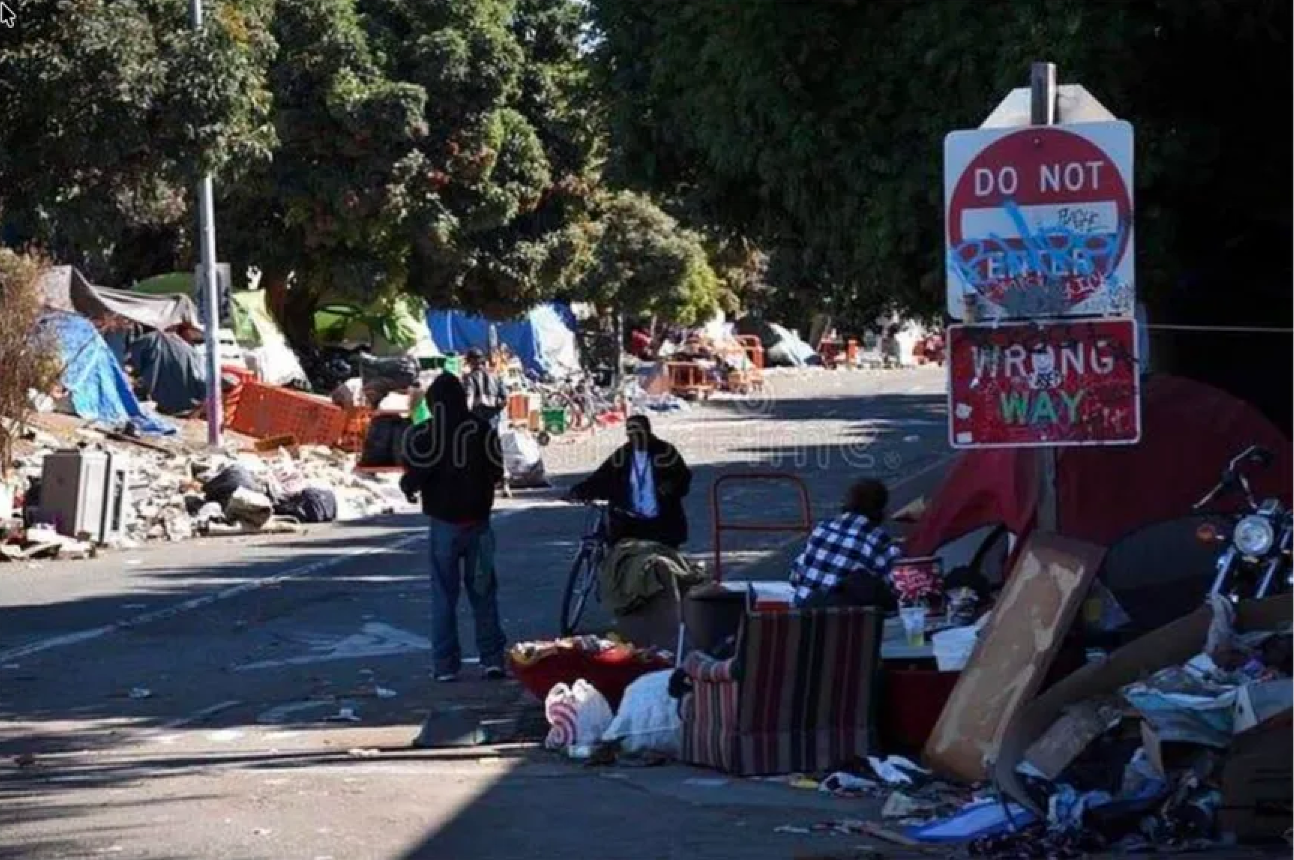
To put things in perspective let’s begin with some startling numbers for our entire country. According to the Department of Housing and Urban Development (HUD), in January of 2024 there were 771,480 people that experienced homelessness in a single winter night in this country when the count was taken. That’s up from 653,104 (18%) from the year before. This marks the highest increase since 2007. Why? Is the economy entirely to blame when median renter income since 2001 has increased 5% but median rent (adjusted for inflation) has increased 23%? Rental assistance programs seemed to be working from 2007 to 2016 when homelessness numbers where declining about 15% during this period. Then the budget for this type of assistance was no longer a priority as some federal, state, and local policy makers pivoted citing mental health and substance abuse as the main culprits to homelessness. Well, according to SAMSHA, about 64% AddictionHelp.com of the homeless population suffers from substance abuse and / or mental illness.
At a state level, California remains the biggest concern in all of this. Today, California represents about 49% of the unsheltered homeless population in this country. Meaning, a homeless person when counted was not in a shelter or some other type of housing. In fact 78% of California’s homeless population is unsheltered, meaning they live outdoors or in a car. In 2024, there were 5 California cities represented in the Top 10 Homeless Cities in the US. The capital, Sacramento sits at number 14 on the list. California has been one of the staunchest supporters of the ‘Housing First’ model that is based upon the premise that if a person has housing, then most of their problems will diminish or even go away. Proponents of ‘Housing First’ will give a person the opportunity to achieve goals and improve their personal life with no requirement to achieve sobriety or address their mental health condition. Housing becomes the foundation for stability and recover. In otherwords, it shifts the emphasis away from treating the underlying issue. So, wonder why isn’t working?
Let’s begin by briefly reviewing Governor Gavin Newsom’s track record where the issue of homelessness is concerned. In 2003 when ‘Mayor’ Newsom was running for San Francisco mayor he pledged to end homelessness if elected. He had a 10-year plan to build approximately 550 affordable housing units. In 2008 mayor Newsom made a similar promise as he doubled down on his 10-year plan. So, how is Newsom’s track record since making this promise? Some 20 years later San Francisco sits at number 10 on the list of top cities for homelessness in the U.S. The sidewalks around the Civic Center in the great city of San Francisco provide all the evidence one would ever need to support that his plan failed. Now it appears that Newsom has taken this failure stateside. As mentioned earlier, the number of Californians living on the streets has risen dramatically while rents have skyrocketed, and the housing crisis has escalated to a point that may be beyond repair given his administration’s current policies including ‘Housing First.’
Now let’s focus on the great city of Los Angeles which has the 2nd largest homeless population in the United States. It was about 10 years ago when former mayor (2013–2022) Eric Garcetti promised a blueprint to eliminate homelessness in Los Angeles. He even convinced taxpayers to approve billions of dollars in the form of a .25% sales tax increase for Measure H to invest in ‘affordable’ housing for its homeless. Below is a summary recap of Measure H:
- The goal of former Mayor Garcetti in 2016 was 10,000 units in 10 years. In 2020 he had approved only 118 buildings for funding so far. At that time only 20 buildings were under construction.
- The estimated median cost per unit in 2016 to be around $350k. The average median cost in 2020 was around $540k, with some as high as $700k per unit. Today some units are estimated at $837k and even as high as $1 million dollars today.
- Over $1 billion will go towards ‘soft costs’ under Prop HHH. Soft costs or impact fees are a major source of revenue for the city and the state.
While some officials insist the county will achieve its goal by 2026, the results are appalling as L.A.’s unhoused population has increased by 37% since voters first established the quarter-cent sales tax increase with Measure H in 2017.
There is a back story behind all this and the city’s inability to deliver on promises from 9 years ago. There are literally billions of dollars in hidden ‘impact’ fees (soft costs) that make building affordable housing nearly impossible in California. California’s impact fees are more than 3x the national average. A recent study shows the average impact fee on a multifamily unit in California is $21,703, nearly triple the national average of $8,034. Similarly, California’s average single-family unit fee of $37,471 is triple the national average of $13,627. Where are these dollars really going? Is there any accountability to the taxpayers when the homeless numbers continue to rise?
Now the city, county and its taxpayers are desperate and doubling down as Measure A was passed during last November’s election. Again, raising sales taxes by another quarter percentage point (.25%) as LA County is determined to misspend and throw billions of dollars at a problem that continues to grow annually. Proponents of this measure claimed or threatened that 57,000 people would have been homeless if this bond measure did not pass. The L.A. Alliance for Human Rights (an opponent of Measure A due to the lackluster performance Measure H and lack of accountability for spending) won a legal settlement with the city and county of L.A. to provide more shelter and treatment beds for unhoused people. This case has led to an ongoing audit of local government spending on homelessness. If ‘Housing First’ is working, then why are more people homeless today than ever before in this city and state? Denial of the ineffectiveness of current models and threatening taxpayers will not make this problem go away.
Does the city and county have a plan this time? Or are they just competently incompetent? Last month LA County voted to remove $350 million in funding from the LA Homeless Service Authority’s budget. Within days of this announcement the organization’s top official resigned amidst scrutiny regarding possible accounting and accountability issues. The City of LA (the next largest funding source at $306 million) is considering a similar move. Bottom line is that California and it’s largest city are a complete mess when it comes to providing a solution for its homelessness epidemic. And the outlook seems to be going from bad to worse after reviewing the state’s balance sheet.
After receiving a Covid bailout California’s budget deficit still ballooned to nearly $56 billion in ‘net debt’ for 2024–25. California now has the country’s 5th highest budget deficit and the largest homeless population. LA’s budget was recently updated to reflect a $1 billion deficit. Governor Newsom likes to brag about California being the world’s 5th largest economy, but he doesn’t know to balance its check book. If you combine California’s federal, state, and local debt it comes to about 1 trillion dollars .
Unless of course they wish to forgo government funding. If the homeless and poverty stricken want their basic needs to be provided for, then they need to make a commitment to improve their lives. Spending billions of dollars for people who do not wish to get better is not money being wisely spent.
So, what will California do to address the unaffordable housing crisis and reduce its homeless population which is about 25% of the national problem? The answer could be that the Federal Government needs to step in and alleviate a substantial part of the affordable housing burden from the states especially California and New York where the cost of living is so high that a family of four anywhere near the poverty line cannot get its basic needs meet. If the rule of thumb is no more than 30% of income going towards rent, then families earning anywhere near the federal poverty line of $32,150 can’t afford to live in these cities. Even a tiny home (70 square feet) is estimated to cost around $18,000 in Los Angeles. But for those struggling who can even afford this?
Can Trump and his administration put their ‘dealmaking’ capabilities to overcame cost barriers such as impact fees? This is a real chance for the Federal government to push through these barriers that it is largely responsible for as it did not manage past programs through organizations efficiently. The Trump administration now plans to overhaul and consolidate. Recently the Trump administration cited wreck less spending as a key reason to cut dollars from the HUD and SAMSHA. However, the administration is proposing to give a substantial part of these dollars back to the states.
The idea of the Feds using some of its land for affordable housing while the states use its designated funds to provide long term supportive services such as case management, substance abuse and mental health treatment, education and job skill possible could have some real merit. In other words, the solution to solving the homelessness problem could be a federally funded affordable housing program and state funded permanent supportive services programs to support this. For example, California could use the billions it expects to collect from Measure A and apply these dollars to long term supportive services such as substance abuse treatment, therapy, case management, job and life skills development to treat its homeless instead of building expensive housing that takes too long as costs rise.
The announcement follows a recent report from the Realtor.com® economic research team, which found that the country has a “housing supply gap” of at least 3.8 million units. At the current pace of construction, it would take more than seven years for supply to catch up with demand, the report found. According to a study conducted by the National Alliance to End Homelessness and the University of Pennsylvania the U.S. could put about 350,000 people into permanent supportive housing at a funding level of around $15 billion.
Seven (7) years sounds a lot better than the current plans that seem to be squandering and misspending billions of taxpayer dollars. In two (2) years, this country’s homeless population could reach 1 million and California’s homeless population could be at 250,000 (25%) or more of that number. It’s time for the Federal and State governments to truly start working together for the greater good. It’s becoming clear that California’s elitist and isolationist attitude coupled with failing policies is destroying itself from the inside out. California needs to start using its taxpayers dollars more wisely and start aggressively treating the real issues of homelessness such as mental illness, substance abuse, trauma, job and life skills development. This major shift in policy and attitude along with help from the Trump administration will give its homeless population a real chance in society today versus the current options of jails, institutions, and death.