
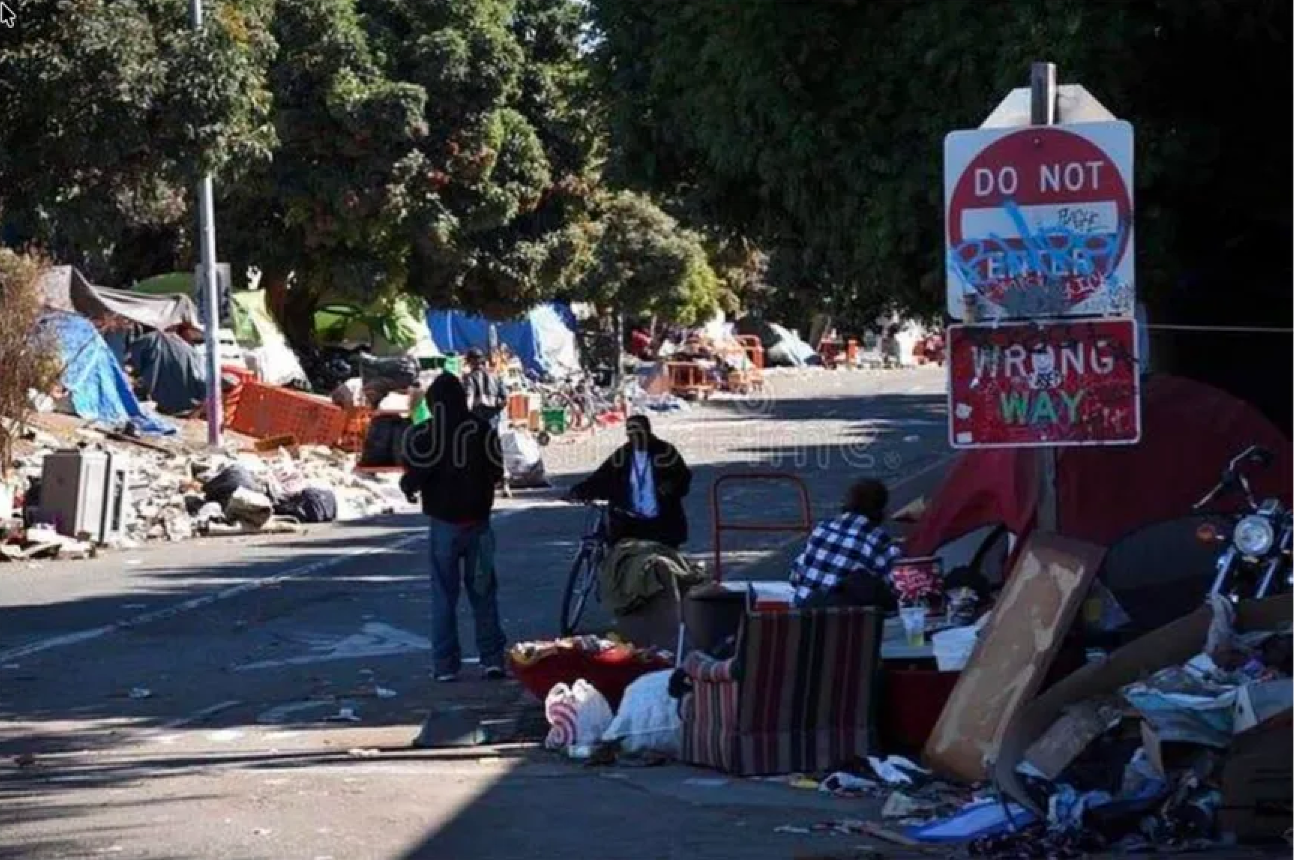
‘Housing First’ (without many requirements) doesn’t seem to be very effective as over 60% of the homeless population suffers from either substance abuse and/or mental illness. Addiction and mental illness are treatable diseases with long term care, but there is no cure. Simply providing shelter will not cure a disease. It allows the individual to go untreated, retain housing without much accountability and therefore the individual’s ability to contribute to society is severely limited noting severe mental illness and disability as exceptions. The ‘Housing First’ model is also ineffective due to the ‘no barriers’ restriction which means that help for substance abuse, mental health, and other support services are strictly prohibited from being mandated by organizations providing these types of services. Unless of course these organizations wish to forgo a chance at government funding which makes it incredibly difficult for them to survive. Many nonprofits are faced with denied funding or it’s taken away when participation in classes, groups, support group meetings are required.
Housing First was adopted by the HUD in 2013. It’s been over a decade and the numbers keep getting worse while the costs are skyrocketing. Federal funding for homelessness assistance has increased every year over the last decade, even before billions were allocated during the COVID-19 pandemic. For an entire decade from 2009–2019, the federal government increased homelessness assistance spending by 200%. From 2014 to 2019, the number of rapid rehousing and permanent supportive housing units increased to 42.7%. Yet for that same period, the number of unsheltered homeless individuals increased by 20.5%
In 2023, Congress appropriated more than $9.7 billion for homelessness assistance and a 6% increase to $10.3 billion for FY 2024 . This represents more than 3x the amount from the $2.8 billion spent in 2008, and doesn’t include the billions spent by states, local governments, and the nonprofit sector. Yet, dollars for treating victims of domestic violence, sexual assault (only $52 million) and diseases such as mental illness and addiction were not the highlights of this funding approval and yet Congress praised these increases as a ‘Bi-Partisan’ win. The requested budget for SAMSHA’s 2024 substance abuse and mental health programs remained relatively flat for the 3rd consecutive year at $75 million. The current administration’s plan is to cut funding here and give dollars back to the states. What will these states do with these funds? For example, in its 2021/2022 budget California allocated an additional $5 billion to go towards housing and other supportive services. It’s clearly not the money. It’s the policies and the lack of accountability.
The Housing First model lacks the required support and accountability for those struggling with substance abuse and mental illness. Many are not even required to get a job and sustain work (noted exceptions such as disability and severe mental illness) and contribute to society. It makes sense that if the homeless and poverty stricken want their basic needs to be provided for, then they need to make a commitment to improve their lives and contribute as best as they can.
Proponents of ‘Housing First’ believe this model will give a person the opportunity to achieve goals and improve their personal life with no requirement to achieve sobriety or address their mental health condition. This makes Housing First the foundation for stability and recovery. In other words, it shifts the emphasis away from treating the underlying issues. How does someone with untreated mental illness and addiction obtain and maintain a job and provide for themselves and family?
Lack of accountability is evident as there is little to no case management beyond housing placement and facilitating access to supportive services. Homeless have the option to stay in permanent supportive housing longer than they would have remained homeless, continuing to occupy units that would otherwise be available for others.
The Housing First model is expensive. For example in Los Angeles, the estimated median cost per housing unit in Los Angeles was originally estimated to be around $350,000 about 9 years ago. Then the average median cost in 2020 rose to around $540,000, with some as high as $690,000 per unit. Today some units are estimated at $837,000 and even as high as $1 million dollars today. Kevin Corinth of the American Enterprise Institute estimates it takes 10 permanent supportive housing units to reduce homelessness by just one (1) person.
In a study entitled ‘HOUSING FIRST AND HOMELESSNESS: THE RHETORIC AND THE REALITY’ it was specifically noted that from 2010 and 2019 California increased its number of permanent supportive housing units by 25,000, yet the number of unsheltered homeless people in the state increased by 50 percent. And in spite of this evidence, the Los Angeles taxpayers remain uniformed desperate as the city, county, and its taxpayers are doubling down as Measure A was passed during last November’s election. Again, like Measure H (passed in 2016) it raises taxes by another quarter percentage point (.25%) as it seems that LA County is determined to misspend and throw billions of dollars at a problem that continues to grow annually.
Proponents of this measure claimed or threatened that 57,000 people would have been homeless if this bond measure did not pass. The L.A. Alliance for Human Rights (an opponent of Measure A due to the lackluster performance Measure H and lack of accountability for spending) won a legal settlement with the city and county of L.A. to provide more shelter and treatment beds for unhoused people. At least this case has led to an ongoing audit of local government spending on homelessness.
How’s Governor Newsom’s track record with ‘Housing First’?
Today, California represents about 49% of the unsheltered homeless population in this country. In 2024, there were 5 California cities represented in the Top 10 Homeless Cities in the US. The capital, Sacramento sits at number 14 on the list. In total there were 9 California cities in the top 20 for 2024. Yet, California has been one of the most loyal and committed supporters of the ‘Housing First’ model. How do they treat victims of domestic violence and sexual assault? Some programs indicate they make a therapist available, but it’s not required.
In 2003 when ‘Mayor’ Newsom was running for San Francisco mayor he pledged to end homelessness if elected. He had a 10-year plan to build approximately 550 affordable housing units. In 2008 mayor Newsom made a similar promise as he doubled down on his 10-year plan. So, how is Newsom’s track record since making this promise? Some 20 years later San Francisco sits at number 10 on the list of top cities for homelessness in the U.S. Now it appears that Newsom has taken this failure stateside. If ‘Housing First’ is working, then why are more people homeless today than ever before in this city and state? Denial of the ineffectiveness of current models and threatening taxpayers will not make this problem go away.
It’s critical that the federal government and the HUD stop prioritizing the costly and inefficient housing-first approach. Instead, it should divert funds for programs tied to improved outcomes, such as reduced substance abuse, improved mental health through longer term therapy, and transitioning people into a self-supported environment where people take responsibility for job and housing, thus reducing overall rates of homelessness permanently.
A more balanced approach between Housing First and Recovery First must be reached to treat underlying conditions such as lack of job skills, life skills, financial illiteracy, substance abuse and mental illness. Everyone’s needs can be different, so a ‘one size fits all’ approach does not make sense, and the numbers show it clearly does not work. When longer term sobriety and improved mental health occur, it increases housing and job stability .
The Birmingham Model is an example of a successful treatment-first program. It combines housing with treatment, providing people with a private unit while requiring recipients to abstain from substance abuse. Those who fail to remain sober are moved to a spot in a shelter; they can work toward regaining the private unit by staying sober for a week. Community-based support for men, women and children providing long terms support services and accountability are essential for a successful recovery from poverty, domestic violence, addiction, and mental illness. But, without long term supportive services even this model will have limited success as ‘one and done’ doesn’t usually work.
The majority of homeless people are dealing with some form of mental illness. Not to mention we are talking about battered single mothers and their children who need long term professional care and support. California and New York should look to different models now including efforts to improve their mental health care systems and address the need to increase the number of hospital beds made available for those struggling with severe mental illness. These beds are in very short supply.
States like California and New York need to start using its taxpayers dollars more wisely. It starts by aggressively treating the real issues of homelessness such as mental illness, substance abuse, trauma, job and life skills development, or they will continue to subject the homeless population to the unenviable options of jails, institutions, and death. Housing First with little to no requirements does not cure addiction, mental illness and compensate for lack of job, life, and recovery skills. It doesn’t treat domestic violence and sexual assault victims and children being traumatized in toxic environments while living on the streets. How does someone with untreated mental illness and addiction obtain and maintain a job? The numbers do not lie, and failure should not be an option.
Steve